11 July 2026 · Updated 18 September 20267 min read
Would You Spot a Rushed AC Install? The Shortcuts Careless Installers Take in Kerala, 2026
The corners careless AC installers cut in Kerala, from skipped vacuuming to under-charged refrigerant, why they are invisible at handover, and what to do.
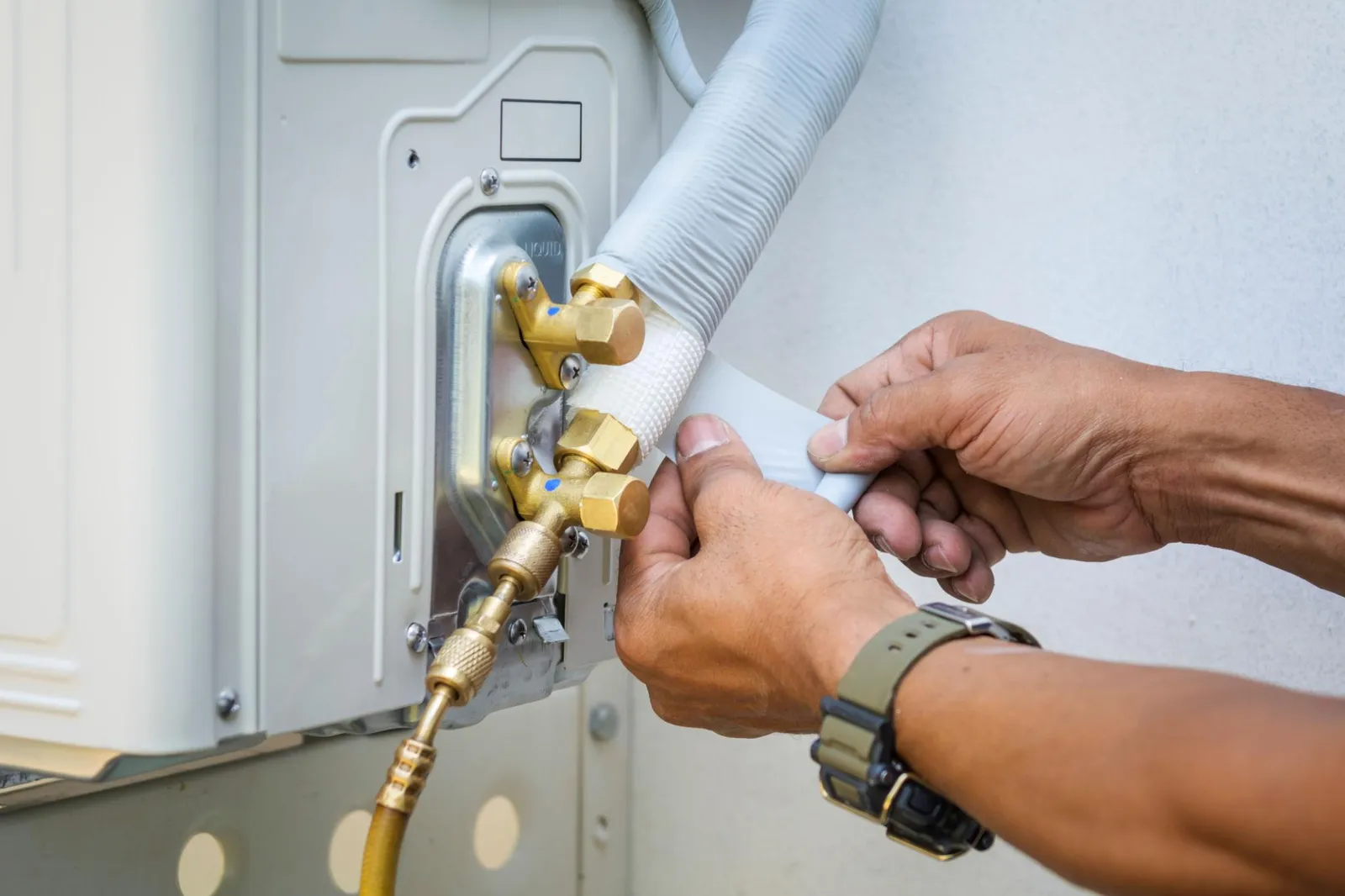
A bad air conditioner installation looks exactly like a good one on the day it is finished. The room gets cold, the wall looks tidy, the invoice is paid. The difference only shows up months later, as weak cooling, a water stain spreading on the wall, a creeping electricity bill, or a compressor that fails years before it should. By then the installer is long gone, and the shortcuts that caused it are sealed inside the wall and the pipework.
That gap between how an install looks and how it was actually done is the whole problem. The corners a careless installer cuts are, almost by design, the ones you cannot see at handover. Here are the common ones, why they get taken, and the only real way to make sure you are not paying for them.
The shortcuts, and why they get taken
None of these are accidents. Each is a deliberate saving of time or material that the installer knows will not surface until well after your payment has cleared.
Leaving the system short on refrigerant
A unit that is slightly undercharged still blows cold air on the trial run, so the shortfall passes unnoticed. On a longer pipe run the installer is supposed to add gas to the manufacturer's specification; skipping that top-up saves them refrigerant and time. You are left with a system that never quite cools, runs continuously, draws more current, and slowly stresses the compressor.
Skipping the vacuum and pressure test
This is the step you never see and the one that matters most. Before gas is released, the pipework should be pressure-tested for leaks and vacuumed to pull out air and moisture. Skipping it saves twenty to thirty minutes per job. The moisture left behind forms acids inside the system, ices up at the expansion valve, and shortens compressor life. It is the single clearest marker of a rushed install.
Rushed flares and loose fittings
A good flared joint is cut clean, sized correctly, and torqued properly. A rushed one weeps refrigerant slowly over months until the unit is visibly weak a year later and nobody connects it back to the day of installation. Proper flaring is slow, so it is the first thing to go under a packed summer schedule.
Thin, reused, or badly routed copper
Substituting thinner-gauge copper, or reusing old pipe from a previous job, quietly saves material cost. So does routing the line with tight bends because the neat path took longer to plan. Restricted or reused pipework hurts refrigerant flow and cooling from day one, in ways a customer cannot spot.
Insufficient pipe insulation
The copper between the units has to be insulated continuously. In Kerala's humidity, any bare or thinly wrapped section sweats, drips, and wastes cooling, and it looks poor where the run is exposed. Cutting insulation short saves lagging and time, and the dripping only starts once the humidity climbs.
Careless wall drilling and unsealed penetrations
The core hole through the wall should be angled correctly, drilled cleanly, and sealed afterwards. A rushed hole cracks plaster, comes out at the wrong height, and is left unsealed, which lets rain and humid air track back inside along the pipe. The damage is cosmetic and structural at once, and it is entirely avoidable.
An indoor unit that is not level, or boxed in
If the indoor unit is even slightly off level, condensate cannot drain and water backs up and drips into the room. Mounted too close to a side wall or ceiling, its airflow is choked. Both happen when the unit is fixed wherever is quickest rather than where it should go.
An outdoor unit dumped in a hot corner
An outdoor unit pushed into an unventilated corner on a flimsy bracket cannot reject heat properly, vibrates loose over time, and fails early. The easy location is faster to reach and quicker to mount, so that is where a careless team leaves it, with no thought to airflow clearance or future service access.
No commissioning, no handover, one vague price
"It is cooling, so the job is done" is not commissioning. A proper handover checks performance and drainage, shows you what was installed, and itemises what was charged. A single lump-sum figure with no breakdown hides both the shortcuts above and the extra items that get quietly added later.
Why cheap installs stay cheap for the installer, not for you
There is an economic logic behind all of this. During peak summer, retail-linked and volume installers are paid for throughput, not care. A rushed job that is finished is worth more to them than a careful one that takes twice as long. The shortcuts are invisible at handover, and by the time they surface, the failure reads as a product fault rather than an installation fault, and the warranty conversation gets murky about who is responsible.
The lowest quote often looks lowest precisely because some of these corners are already priced out of it. A low initial price is meaningless if the AC cools poorly, leaks water down the wall, trips the breaker, or burns out a compressor in year three.
This is measured, not merely asserted. In Sensitivity Analysis of Installation Faults on Heat Pump Performance (Domanski, Henderson and Payne, NIST Technical Note 1848, October 2014), the field surveys reviewed found that the majority of air-conditioning equipment evaluated performed below its rated energy efficiency because of one or more installation faults, with leaky ducts, improper refrigerant charge, oversizing and restricted airflow the recurring offenders. The equipment was rated correctly. The installation is what moved the number.
That is why installers like HRS price for the work required to make the system last, not merely to finish the handover.
So how do you actually guarantee value for money?
Here is the uncomfortable truth: you cannot personally police most of this. You cannot see a skipped vacuum, judge a flare, or measure the refrigerant charge while standing in your living room. Watching the installer does not help if you do not know what proper looks like. (If you want the full picture of a correct job, we set it out step by step in what a proper AC installation actually includes.)
Because the work is invisible, the guarantee cannot come from a checklist you enforce on the day. It comes from who does the work, and specifically from whether that installer has any reason to care after they leave your site. A team paid by volume has none. A firm whose next job depends on this one behaving well has every reason.
That is the practical case for using an experienced, accountable operator rather than the cheapest available hands. It shows up as small, checkable habits: a site assessment before any quote, an itemised quote so extra copper or a stand or core-cutting is on paper rather than sprung on you afterwards, the invisible steps like vacuuming done as standard, and a service record kept so the same team knows what was installed when you call two years later.
Where HRS fits
This is the part of the business we are most protective of, because it is where our reputation is actually made. A large share of our installation work comes from clients who came back for their next unit, their office, or their second home, and from people who first called us to correct a botched third-party install and then stayed. That return rate is not marketing language; it is the only honest scorecard an installer has.
We are not the cheapest option, and we do not pretend to be. What we hold ourselves to instead is the work you cannot see: proper vacuuming and pressure testing, correct flaring and continuous insulation, an outdoor unit sited for airflow and service, itemised market-rate quotes with no surprises after the job, and a documented record for every unit we handle across all 14 districts. The clients who value that tend to be the ones who have already paid once for a shortcut and decided never to again.
If cooling that holds up for years, and one accountable team behind it, is what you want, that is what we go the extra mile to deliver. If you have been let down by a rushed install before, we are glad to look at what was done and tell you honestly what it needs.
For an installation done to a standard that lasts, request a quote or contact our team. For the summer-queue problem behind so many rushed installs, see why nobody comes to install your AC in peak season.
Why this matters to you
How HRS turns this into a better AC decision
Home AC decisions work better when the room is sized properly, heat gain is checked, and the equipment is matched to the way the space is actually used. That is the level HRS brings to residential AC work.
Related Service
Residential Air Conditioning SolutionsRelated Guides
Continue your research
These guides cover the next decisions commonly connected to this topic.
Keep Exploring
Continue from this guide into the matching HRS service page or a relevant Kerala service area.
Related Services
Need expert HVAC help?
Contact our team for professional installation, maintenance, or a custom consultation.